Loading...

Loading...
Loading blog post...
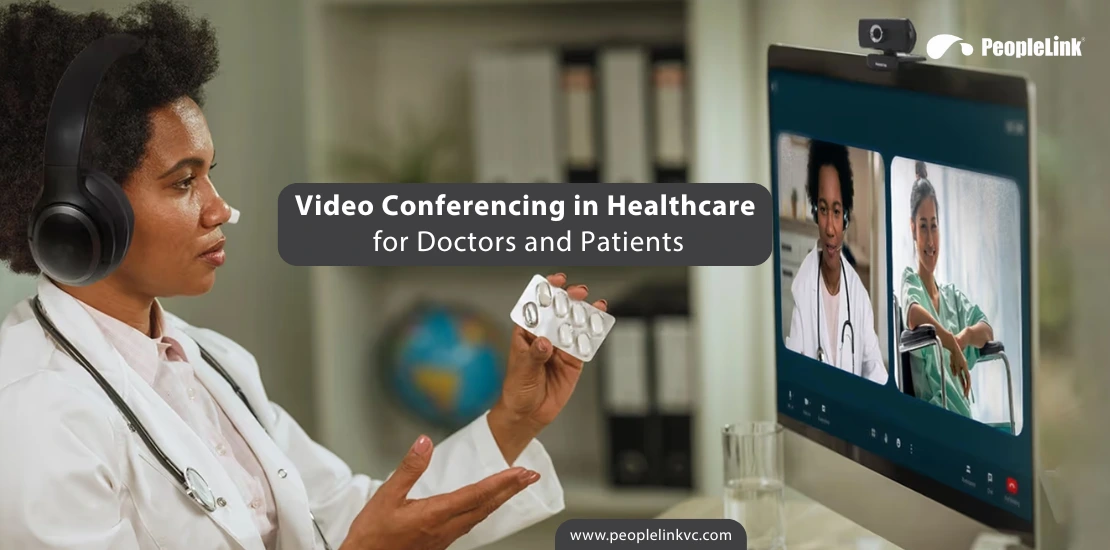
Video conferencing in healthcare is reshaping how doctors and patients connect, making medical care faster, safer, and more accessible. With the rise of telehealth and virtual consultations, hospitals now use secure video platforms to provide real-time medical support without requiring in-person visits. This technology improves doctor-patient communication, reduces travel, and ensures quality care reaches remote and busy regions.
In this article, we explain what video conferencing in healthcare means, highlight 15 ways hospitals use it daily, uncover its key benefits, and show how PeopleLink TeleHealth Solutions helps healthcare providers deliver smarter, connected, and efficient digital healthcare services.
It improves communication in healthcare by working just like a standard conversation, but instead of sitting in the same room, the interaction happens through a screen. It allows doctors to see, hear, and talk to patients in real-time using the internet.
Traditionally, if you felt sick, you had to travel to a clinic, wait in a lobby, and physically meet a doctor. With video conferencing, this physical meeting is replaced by a digital one. You use a smartphone, tablet, or computer with a camera to meet the doctor. The doctor uses their own screen to see you, ask questions, and look for physical signs of illness.
While it feels similar to using FaceTime… specialized telehealth video conferencing is different.
It is essentially a “Virtual Clinic.”
When you video call a friend, the goal is just to chat. When you video call a doctor, the goal is to solve a medical problem. Because of this, the video tool has often become part of larger digital health platforms used by the hospital.
During the call, the doctor can pull up your medical history, look at your past X-rays on their screen, and type notes into your permanent health file, just as they would if you were sitting in their office.
The core idea is removing distance to improve doctor patient relationships and remove barriers to care.
Think of it as bringing the doctor’s office into your living room. It changes the medical experience from something you have to go to, into something that comes to you. Whether it is a quick check-up for a flu, a therapy session, or a follow-up after surgery, video conferencing bridges the physical gap. It ensures that a patient can receive professional online medical advice and treatment without the physical burden of travel. This practice is often referred to broadly as telemedicine healthcare or Telehealth.
This is likely the most common use of video in healthcare today. Instead of driving to a clinic, patients can connect with a psychiatrist or therapist from the privacy of their own home. It makes mental health support more accessible and less intimidating for patients dealing with anxiety, depression, or stress.
Recovering from an injury or stroke often requires physical therapy exercises. With virtual rehabilitation, a physical therapist watches the patient perform these exercises over a video call. They can correct the patient’s form and track their progress without the patient needing to travel to a gym or hospital gym while in pain.
This is the standard ‘virtual doctor visit,’ often referred to as online medical consultations or telemedicine consultations. It is used for routine issues like the flu, skin rashes, or follow-up questions. The doctor and patient talk face-to-face on a screen, and the doctor can visually examine the patient (e.g., “show me your throat”) to decide if they need medicine or further testing.
Patients in critical condition need 24/7 observation. Video cameras allow specialists to monitor a patient’s status continuously from a central station. If they see a sudden drop in the patient’s condition on the screen, they can immediately alert the nurses on the floor to intervene.
Being in the hospital can be lonely and confusing. This application uses bedside tablets to let patients easily video call hospital support staff to request patient care services or non-medical needs for non-medical needs (like fixing the TV or ordering food) or to connect with their family members who cannot visit in person.
Before a major procedure, a patient must agree to it legally. Hospitals now use video to record the doctor explaining the risks and the patient saying “yes.” This creates a clear, digital record that proves the patient understood what would happen, protecting both the patient and the hospital.
Sometimes, a surgery is very complex. Hospitals use high-quality video in the operating room to stream the surgery live to a top expert located elsewhere. This remote expert (the proctor) can watch and guide the local surgeon in real-time, ensuring the patient gets the benefit of world-class expertise during their operation.
This connects the ambulance crew to the emergency room doctors while they are still driving to the hospital. The paramedics can show the patient’s injuries to the doctor via video, allowing the hospital team to prepare the exact equipment and medicine needed before the ambulance even arrives.
An eICU is like a command center where a single specialized doctor watches over dozens of ICU patients in different hospitals simultaneously via video. It adds an extra layer of safety, ensuring that even if the bedside doctor is busy with one patient, the “virtual” doctor is still watching the others.
In major events like earthquakes or large accidents, there are often too many patients for on-site doctors to handle. Video conferencing allows remote doctors to look at patients through cameras quickly and tell the on-site team which patients need immediate help and which ones can wait (triage).
Doctors typically walk from room to room to check on hospitalized patients (rounds). Digital rounding allows the doctor to “beam in” to the patient’s room monitor to check on them. This saves the doctor travel time and allows them to see patients more frequently.
Patients with chronic conditions like heart disease often use wearable devices at home. If the device detects a problem, the doctor can initiate a video call. Using video conferencing for patient monitoring connects the “numbers” from the device with a real conversation. It connects the “numbers” from the device with a real conversation about how the patient is feeling.
After a patient is discharged from the hospital, the first few days are critical. Instead of making the weak patient come back to the hospital for a check-up, doctors use video calls to check surgical wounds, review medications, and ensure the patient is recovering safely at home.
This connects one therapist with a group of patients who have similar conditions, such as addiction or grief. Everyone joins the same video call from their own homes, allowing them to share experiences and support each other under the guidance of a professional.
Medications can be confusing. This service allows patients to video call a hospital pharmacist to ask questions about their prescription, side effects, or how to take their pills correctly. It ensures patients don’t make dangerous mistakes with their medicine after they leave the hospital.
Instead of fighting with loose cables, the whole room now works as one smooth system. You can walk in, press a single button, and start your meeting instantly. The video looks sharp on the screen, and the audio is loud and easy to understand. This technology stays in the background so you can simply focus on talking to your team. It turns a basic room with a table into a smart space where collaboration happens easily.
Medical appointments can often feel stressful or intimidating. Video conferencing removes the clinical “hospital” atmosphere and replaces it with a familiar setting.
One of the biggest problems in healthcare is that people skip appointments. Life gets in the way. Video calls remove the barriers that usually cause people to cancel.
Sometimes the best doctor for your specific problem does not live in your town. In the past, this meant long, expensive travel. Video conferencing and telehealth services online remove distance from the equation.
A standard doctor’s visit often involves hours of travel and waiting for just 15 minutes of conversation. Video conferencing strips away the wasted time.
Hospitals and clinics are full of sick people. Going to the doctor to fix a sore knee might accidentally expose you to the flu. Video calls create a digital safety barrier.
Here’s the glimpse of how PeopleLink helps hospitals connect with their patients:
Get Started With PeopleLink Today
Transforming your hospital into a “smart hospital” does not have to be complicated. At PeopleLink, we are ready to help you build a healthcare system that connects doctors and patients seamlessly, no matter the distance. Whether you are looking to integrate telemedicine and video conferencing platforms, we have a solution that fits your needs and your budget. Contact PeopleLink Today to embrace the future of telemedicine and bring better care to your patients.
Don't get left out of the professional loop! Follow us
LinkedIn