Loading...

Loading...
Loading blog post...
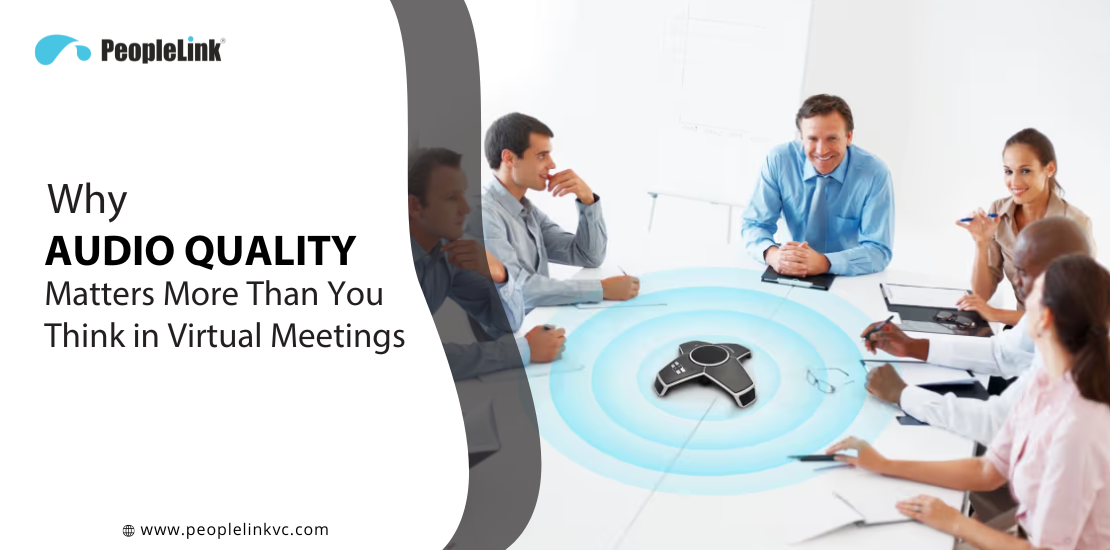
In a virtual meeting, a conversation is about listening, understanding, and connecting. But we often forget the single most important part of that connection: clear audio.
We get distracted by other things, but a meeting’s success almost always depends on the quality of its sound. If people can’t understand each other easily, the meeting fails.
This article explores why audio is the true foundation of all online video communication. We will cover the challenges of bad audio, the benefits of good audio, and the simple steps you can take to sound better for good.
When the audio is crisp and clear, listening becomes easy. Your brain can use 100% of its power to understand the ideas being shared, not just to figure out the words.
Good audio quality also makes you sound more competent, intelligent, and trustworthy. It is the virtual equivalent of making eye contact, having a firm handshake, and speaking with clarity. It sends an instant signal of professionalism, a positive sound visual telling everyone, ‘I am prepared, I value your time, and what I have to say is important.”
Think of your brain as a computer with a limited amount of processing power. When audio is clear, your brain works efficiently to understand the ideas.
But when audio is bad garbled, quiet, or full of background noise your brain is forced to work overtime. It’s scrambling to fill in the missing gaps and predict the next word. This extra work is known as “Cognitive Load.” You feel completely drained after a day of calls because your brain is exhausted from the hidden, mental work of decoding bad audio.
This is the most surprising part. Bad audio doesn’t just make you tired; it makes you distrust the speaker.
Psychologists call this “Cognitive Fluency.” This principle states that we prefer things that are easy to think about. Our brains are wired to associate “easy to process” with “safe and true.”
When the audio is clear, we are open to the message. But when it is distorted or difficult to process, it creates “cognitive friction.” Your brain stumbles. And you don’t blame the audio quality; you unconsciously blame the speaker.
Studies have shown that a speaker with poor audio is rated as less intelligent, less competent, and less likable. Their ideas lost all credibility, simply because they were hard to listen to.
This is the most important step. The single biggest improvement you can make is to get your microphone closer to your mouth.
The built-in microphone on your laptop is your worst enemy. It’s far away and has to crank its sensitivity, so it picks up every other sound in the room.
The easiest and most effective fix is a good headset, such as high-quality bluetooth headsets or wireless headphones for easy movement. This solves two problems at once:
A headset with noise canceling audio is even better. If you don’t like headsets, a dedicated audio conference system or a specific hybrid meeting microphone is the next best thing. These are designed to be clear microphones that make your voice sound rich and professional.
Before you buy new hardware, check the tools you already have.
Your conference meeting room setup is critical, as sound bounces off every hard surface in your room. If you are in a home office or a conference room for meeting with hardwood floors, large windows, or bare walls, you will create echo.
The fix is simple: Add soft stuff. A carpet, a set of curtains, a fabric sofa, or even a bookshelf will absorb your voice instead of reflecting it. You don’t need a professional studio; just adding a few soft items can make a massive improvement.
Bad audio attacks the listener. It forces your brain to stop focusing on meaning and start focusing on just deciphering the words. Clear audio is the only thing that lets you move past simple hearing and into true, active listening, which is essential for effective communication. In any meeting, your voice is your presence, and clear audio is what makes that presence felt.
If you’re serious about upgrading your audio, the most powerful move you can make is to invest in a complete audiovisual solution, not just the standard video conferencing equipment. This one-time upgrade will permanently transform every one of your future meetings.
At PeopleLink, we’ve spent years designing the perfect audiovisual solution for every situation, from a high-quality audio system for conference room use to personal headsets that solve the exact problems of echo, background noise, and low bandwidth. We built these audio & video tools to work perfectly together, so you can finally stop worrying about how you sound and focus on the conversation that matters.
Don't get left out of the professional loop! Follow us
LinkedIn